Practical Daily Journal Recommendations for Serious Writers
Why Your Journal Choice Matters More Than You Think
After more than twenty years of writing daily, I have learned that the notebook you pick is not just a surface to write on. It is a partner in your process. The wrong journal can make you resent writing. The right one can make you look forward to it. When I first started, I used whatever spiral notebook was on sale at the drugstore. Cheap paper, bleeding ink, pages that fell out. I convinced myself that the material did not matter, that only the words counted. I was wrong.
The feel of paper under your hand, the way ink behaves, the size that fits your bag, the binding that lies flat or stays open, these details shape your writing habits. Over the years I have tested dozens of brands, from the cheap to the precious, and have settled on a set of daily journal recommendations that I share with anyone who asks. These are not just opinions pulled from reviews. They come from actual use, from filling pages with drafts, notes, and half-baked ideas. I hope they save you the trial and error I went through.
What Makes a Journal Worth Using Every Day
A daily journal has to survive being carried around. It has to accept whatever pen you grab, and it has to feel good enough that you want to open it. I have found that three things matter most: paper quality, binding durability, and page layout. Paper quality is the biggest factor. If the paper bleeds or ghosts badly, you will not want to write on both sides. If it feels too slick, your pen skips. If it feels too rough, your hand tires. The Goldilocks zone for me is paper around 80 to 100 gsm, with some coating that keeps ink from feathering.
Binding matters because a journal that falls apart after a month is useless. I have had perfect-bound notebooks lose signatures. I have had spiral bindings snag and tear. The best daily journal recommendations always include sewn bindings or stitched sections. They hold up to being opened flat, thrown in a bag, and stuffed with loose papers. Page layout is personal. I prefer dot grid because it gives structure without lines. But ruled, blank, and graph all have their fans. The key is to pick one and stick with it long enough to form a habit.
My Top Picks for Everyday Writing
I will not pretend there is one perfect notebook for everyone. But I can tell you which ones have earned a permanent spot on my desk and in my bag. These are the brands I return to again and again.
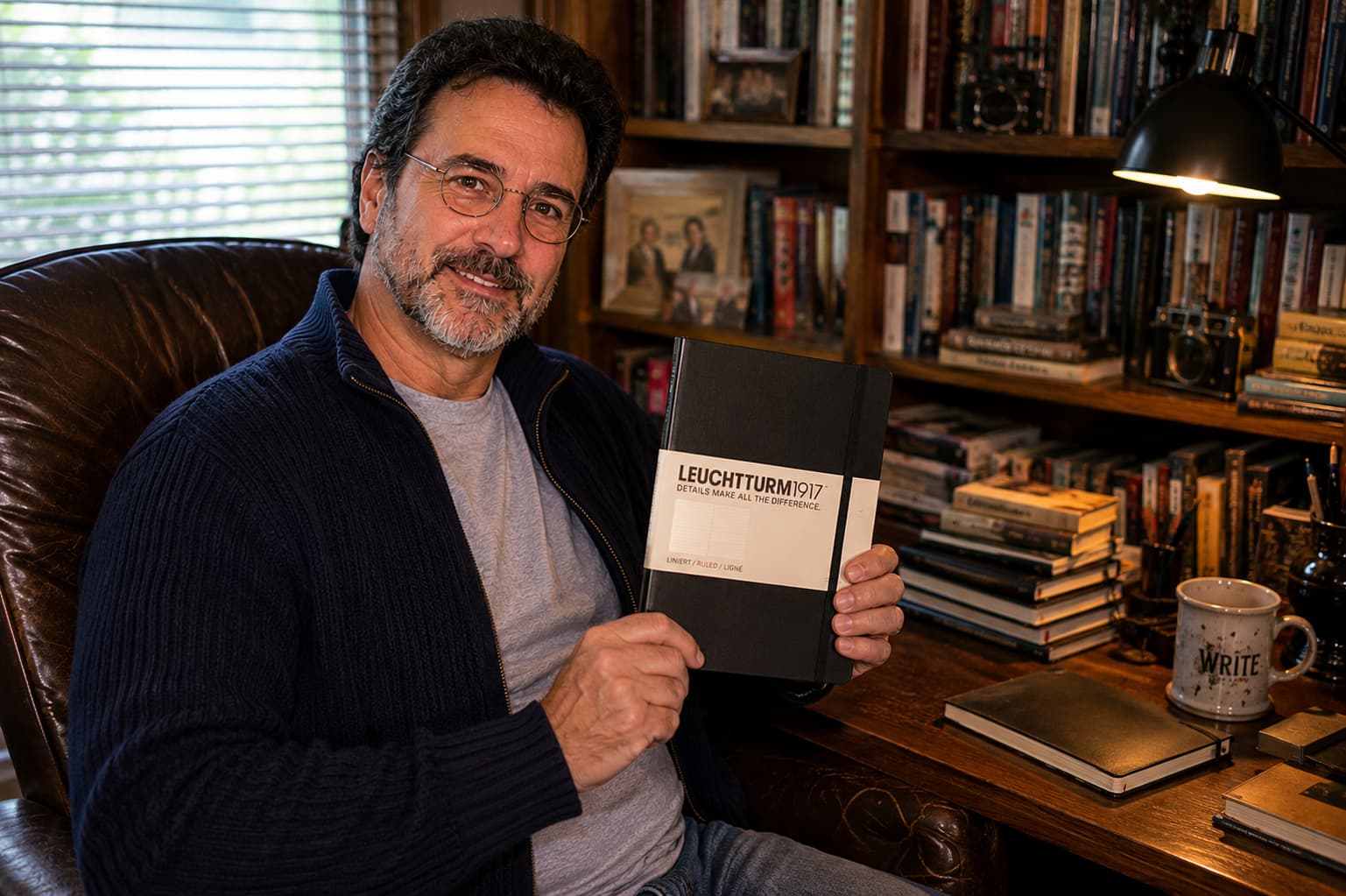
Leuchtturm1917 is probably the most balanced all-rounder I have used. The 80 gsm paper handles fountain pens reasonably well, though it ghosts a bit with wet nibs. The numbered pages and table of contents help me keep my writing organized. I like the A5 size for daily entries. It fits in most bags and gives enough space for a few hundred words per page. The hardcover takes a beating and still looks presentable. If you want a single notebook that does everything reasonably well, this is it.
Rhodia makes my list for two reasons: the paper is incredibly smooth, and the orange covers are instantly recognizable. I use the A4 top-wired pads for drafting, but the A5 staple-bound notebooks are excellent for daily journaling. The 90 gsm Clairefontaine paper inside Rhodia products is some of the best for fountain pens. Ink sits on top and dries fast. No feathering, no bleed-through. The only downside is that the soft covers can get beat up in a bag. But the paper quality is worth it.
Hobonichi Techo is a cult favorite for a reason. The Tomoe River Paper it uses is absurdly thin but handles ink like a dream. You can write on both sides with almost no ghosting. The Hobonichi comes in a few formats, but the original A6 is perfect for compact daily entries. The layout includes a page per day with a grid. It forces you to be concise because the space is limited. I have filled several of these over the years. The thin pages mean you get a lot of notebook in a small package, which is great for travel.
Field Notes are my go-to for on-the-go capture. They are small, cheap enough that I do not worry about messing them up, and the 50 lb paper works fine with ballpoints and gel pens. I keep one in my back pocket at all times. The covers are colorful and fun, and they hold up surprisingly well. These are not for long-form writing. They are for ideas, lists, and quick notes. But if you form a habit of carrying one everywhere, you will write more. That alone makes them worth recommending.
Traveler's Notebook is a system more than a single notebook. You buy a leather cover and then swap in different inserts. I use the regular size with a dot grid insert for daily journaling and a blank insert for sketching. The leather ages beautifully, and the ability to customize the layout is powerful. The paper inside the standard inserts is decent, not as good as Rhodia or Tomoe River, but perfectly usable with most pens. The downside is the cost of the cover. But if you treat it well, it lasts for years.
Specialty Notebooks Worth Knowing About
Beyond the big names, there are smaller brands that cater to specific needs. Nanami Paper makes notebooks with Tomoe River Paper in a variety of sizes. Their Cafe Note is a favorite for those who want the best paper without the Hobonichi date system. Dingbats offers a leather-bound, eco-friendly option with 100 gsm paper that handles fountain pens beautifully. Archer & Olive makes heavy, thick-papered notebooks that are great for mixed media, though they can be bulky for daily carry. Paperblanks and Peter Pauper Press make ornate, decorative journals that appeal if you want something beautiful on your shelf. Exacompta is a French brand that makes excellent, affordable notebooks with Clairefontaine paper. Muji offers simple, low-cost notebooks with surprisingly good paper for the price. I keep a few Muji A5 notebooks around for projects that need a clean, no-frills space.
I also want to mention Baron Fig, which makes a well-designed softcover notebook with 90 gsm paper. It is a solid middle-ground option. And if you are into reusable notebooks, Rocketbook makes a microwave-erasable notebook that syncs to cloud services. It is not for everyone, but it solves the problem of running out of pages.
Pens That Pair Well With These Notebooks
Your daily journal recommendations are incomplete without thinking about what you write with. I have tried many pens, but two have stood out as reliable partners. The Lamy Safari is a fountain pen that is affordable, durable, and writes consistently. I use a fine nib with a waterproof ink, and it works well on most of the papers I mentioned. The Pilot G2 is a gel pen that is smooth, dries fast, and is cheap enough to lose without regret. I keep a box of them in my desk. For the best experience, pair a fountain pen with Tomoe River Paper or Rhodia paper. The combination is sublime.
How to Build a Daily Writing Habit
The best notebook in the world will not help you if you do not use it. I have seen people buy expensive journals and then leave them empty because they felt too precious. My advice is to start with something cheap like a Muji or Field Notes notebook. Write in it every day for a month. Do not worry about quality. Just build the habit. Once you know you will actually write daily, then invest in a nicer notebook. That is when my daily journal recommendations become useful. The Leuchtturm1917 or the Hobonichi Techo are perfect for that next step.
Another trick is to keep your journal in the same place every day. I keep mine on my desk next to my coffee maker. In the morning, while the coffee brews, I write for ten minutes. It is not a lot of time, but it adds up. Over a year, that is more than sixty hours of writing. The journal becomes a record of your thinking. That is valuable in ways you cannot predict.
Final Thoughts on Choosing the Right Journal
There is no single perfect notebook. The right one depends on your writing style, your pen, your bag, and your budget. But I hope these daily journal recommendations give you a starting point. Try one. If it does not work, try another. The important thing is to keep writing. The notebook is just a tool. But the right tool can make the practice a joy instead of a chore.